Find the hidden capacity in your factory.
Done‑for‑you process improvement for Northeast Ohio manufacturing and assembly plants. I diagnose the invisible constraints and implement the fixes while you run the day‑to‑day.
Typical results: faster changeovers, better organization, streamlined methods, visual management, throughput gains, reduction in scrap and rework.
You’ve been in this plant long enough that the waste looks normal. Workarounds, interruptions, backlogs. Everything’s running on brute force and hope.
I find it. In every factory I walk into, I find it.
There’s money on the floor. Stand still long enough and the plant tells you exactly where it’s bleeding.
Northeast Ohio Manufacturers Only
You’re not too busy to fix the problem. You’re busy because of the problem.
Walking waste. Layouts that looked good on paper. Unclear quality specs. Workarounds, interruptions, backlogs. Overtime you can’t sustain.
You’ve been in this plant long enough that the waste looks normal. It seems broken, but it’s just running on brute force.
I watch until I see it — the stupid‑simple constraint that’s stealing your capacity.
You run the factory. I fix the thing you stopped noticing.
Let’s find the cause.
The only manufacturing consultant in Northeast Ohio who walks into a factory, finds what’s actually wrong with the system, fixes it with what’s already there, and guarantees results on every project — without a new capital investment, a training program, new IT software, or a 6‑month engagement.
For in‑depth studies and results, see Mitch’s previous work at mrconsult.ing/successes.
When’s the last time you could dedicate40 hours to one task?
Okay, not fair.
How about 40 minutes?
40 seconds?

Every disruption may seem minor, but in the daily 1,000 piece puzzle you call a workday,
as a factory leader, you need somebody working on the edges and corners so you can handle the big picture.

We work on root causes while you run the factory.

How We Help
What people are saying:
Mitch was very helpful with improving our factory processes. He has strong analytical and excel skills which allowed us to understand the details in our works cells and where we had potential to improve. He acted as part of the team and was very respectful as far as interacting with plant employees. Overall a pleasure to work with and I would recommend him.
- Naturepedic
Chargin Falls, OH
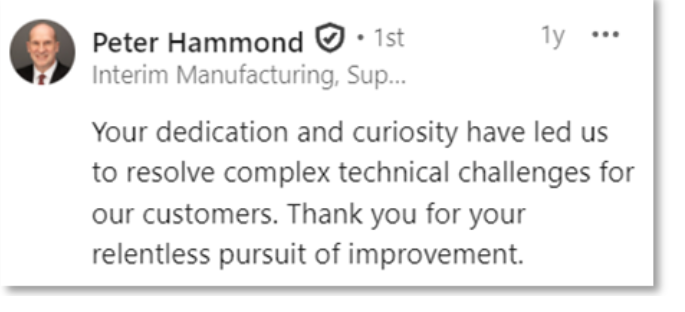
“Thank you for your relentless pursuit of improvement”
- Peter Hammond
Mfg Executive
“His attention to detail is second to none, ensuring that every aspect of a project meets the highest standards of quality and compliance. His vast knowledge and experience in manufacturing make him an invaluable asset, especially when navigating complex design and production challenges.”
- Hayden Frase
Quality Engineer
“Your expertise is unmatched.”
-Valerie LaRiche
Mfg Master Scheduler

Meet the Industrial Engineer Behind Factory Physicians
Mitch Robinson, BSIE — Purdue University
Mitch is a Northeast Ohio Industrial Engineer specializing in manufacturing operations, Lean process improvement and factory problem-solving.
Diagnosis via Factory X-Ray
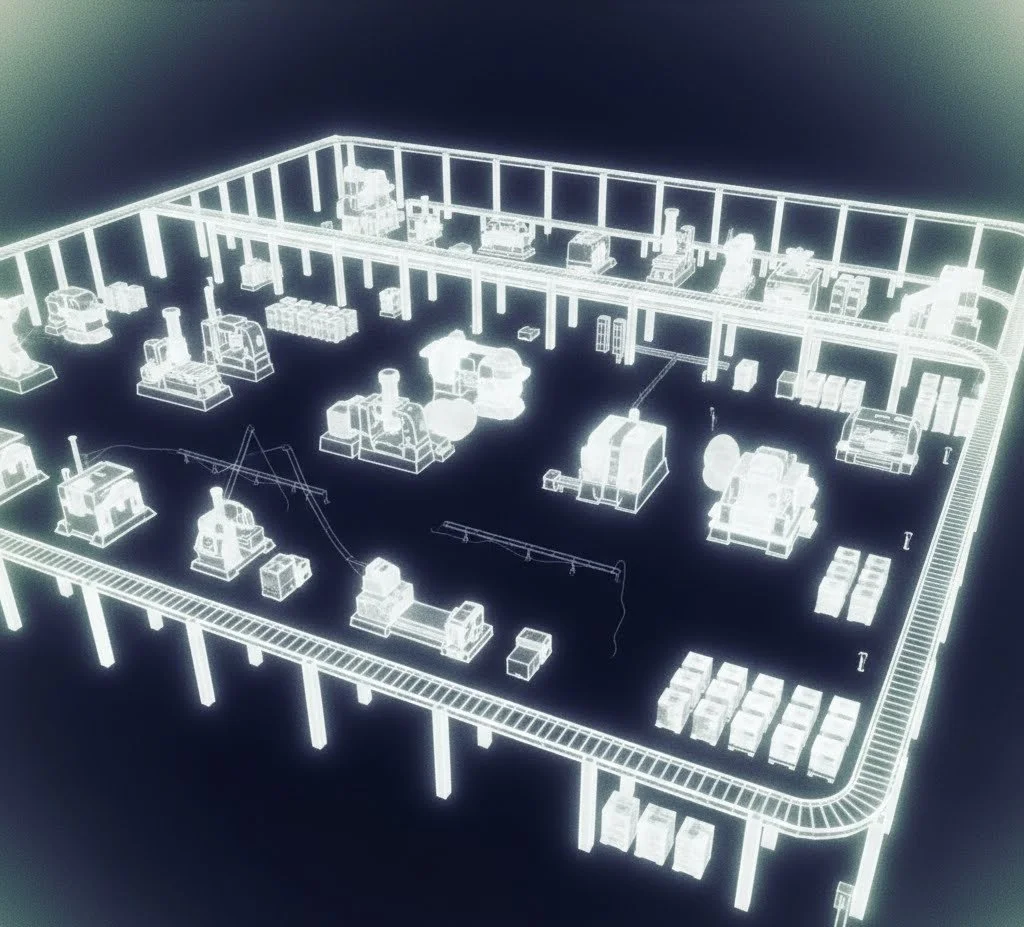
…to See What's Really Causing the Problem
Your quality is off. Your biggest customer is threatening to leave. You keep losing good people.
Your lead times are twice what they should be. The owner wants answers.
You have 10 problems and zero time. Which one do you fix first?
What it looks like:
→ 30-minute call: You tell us what's breaking
then…
Manufacturing Motion Study 📐⏱️
The Factory X-RAY
→ We ask a few stupid questions, study and analyze (usually takes 5 days to walk your floor, study all operations, and talk to people to get the whole picture before we jump to conclusions)
→ We find the root cause (sometimes one thing is causing 3-4 symptoms)
→ We tell you: "Fix this one thing, these other three improve"
→ You decide if you want our help or do it yourself
Example: Medical device manufacturer had a quality problem. Some months: 1% or 2% defect rate.
Other months: up to 15.5% defects.
The defects were tiny. You needed a microscope to see them.
High defect rates caused two additional problems:
Customer returns
Lower output (only 2,500 units instead of 3,500+) because of all the rework time
It looked like chaos. Random. Engineers were checking the air vents to see if they could determine why quality issues spiked.
We found the root cause:
Different operators and QA inspectors were making different judgment calls. They had clear examples of perfect parts (pass) and terrible parts (fail).
But everything in between? Gray area. Everyone used their own opinion.
Employees came and went (normal turnover). We checked for clues. Was it a specific new person? A certain day of the week? No pattern. Just one unclear spec.
The solution:
First few days: Take photos through the microscope
Next few days: Rewrite the spec sheet.
We added useful visual examples.
Not just the obvious ones from before: “perfect vs. destroyed…”
The previous examples were so obvious, it was honestly kind of insulting. Why bother?
This needed some clarity.
We showed the in-between cases.
We clarified:
Which minor blemishes were okay
Which were true defects
Whyeach difference mattered
This helped operators make better parts.
Fewer defective parts sent to QA because the target was clear.It alsocleared up confusion inside the QA department. One inspector had been rejecting 1.5x more boards than the others.
Based on the given spec sheets, she wasn't wrong.
It WAS opinion-based. Subjective gray area.
She was very experienced. She'd lived through recalls and loss of contracts.
She didn't want her name on defective parts.
Who could blame her!?
Now the rules are clear. No more guessing.
Fixed in just a few weeks.
Rejects for this problem: +/- 10% down to 0.003%.
All three "problems" disappeared.
This is you if:
Everything feels just a little off
No clear pattern or obvious red flags
You're not sure which fire to fight today
You want a second set of eyes before you spend money
You need to know you're fixing the RIGHT thing first
What Happens
Factory X-Ray
Our Fast-Paced Plant Diagnostic
This is Step 1.
Spanning multiple days, analyzing all critical departments and processes.
We won’t stop until we’re sure of our findings and fixes. More than once we’ve seen an outsider jump to conclusions based on one weird day or bring up a non-issue. We’ll do our best to filter out the non-issues by gaining full understanding. And we won’t jump to conclusions.
We communicate with you throughout this process, we don’t go hide in some secret room to create baseless theories about your factory.
We interview up and down the line, study, observe, and verify the many spoken and unspoken facts and assumptions that run around in your plant.
Finding and analyzing the bottleneck, locating the real causes of delays, defects, and detours.
You get a neat Factory X-Ray Report detailing exactly what we solved already, plus what each remaining problem is costing you every day.
We aim to find about $50,000-$100,000 in waste and lost opportunity during these first diagnostic sessions. Efficient, thorough, and often very surprising.
Read more - Services
Weekly Process Improvements
Step 2.
After the Full Diagnostic Factory X-Ray, you may optionally choose ongoing support, and that’s where we’ll continue to implement and execute the fixes alongside your team.
A manufacturing specialist works on the next right thing. Undivided attention makes us immensely effective. We focus on the factory, rather than working around shipping deadlines and budget meetings.
Fixing issues, writing out what actually works, adjusting methods, building work stations, doing the deep data analysis..
All the slow, methodical work most plant managers and even staff engineers may never really have the time to do.
We work on the root causes, while you run the factory.
Learn more about these Services
This Is For Factory Leaders Who've Hit the Ceiling
You built this without help and without training wheels. You got this far figuring it out yourself.
But now everything just looks... normal.
Performance plateau.
Decision fatigue,
fires to fight,
spending freezes,
internal politics,
no room on the to-do list for another pet project.
“It is what it is…”
The pile-up you walk past every day.
The working fix that's actually creating waste.
The thing everyone works around without questioning.
You're not failing. Your factory doesn't look sick.
But you KNOW there's more capacity somewhere. You KNOW one adjustment could change everything. You've tinkered. You've pivoted. You've tried new things. What's your next move?
Our Manufacturing Motion Study, the Factory X-Ray, finds what doesn't show up at a glance. I watch. I crunch the numbers. I see the pattern. We find it. We fix it simply.
Northeast Ohio manufacturers only.
We’re breaking now for Q & A.
I’ve probably answered a couple hundred questions in the text above.
But I know there’s one I missed:
The Question on your mind right now.
If it’s a great one, we might even publish the answer so others save a few seconds, too.